.png)
.png)

.png)
.png)


.png)


.png)
.png)


.png)

From Training To Impact: strengthening the wildlife health workforce
18/04/2026
The Big Give Earth Raise is live!
We have just one week – until 29th April - to raise £20k to protect wildlife health. Find out more.
If you are able to help, whatever you give will be doubled by The Big Give Trust. A £1 gift becomes £2,a £5 gift becomes £10 and £50 becomes £100. Every £ makes a difference to threatened animals and the incredible teams striving to protect them.
Mainstreaming wildlife health depends on a skilled, locally rooted workforce. In many of the world’s most biodiverse regions, access to specialist training remains limited. WVI’s approach has evolved from individual mentorship to a more structured model of capacity building—combining bursaries, partnerships and in-country support to strengthen skills, professional networks and local leadership. This contributes to more consistent, evidence-based interventions and a more integrated One Health approach.
It's time to mainstream wildlife health. A key element of making that happen is training the veterinary professionals working on the conservation frontline.
We’ve been talking recently about the growing recognition of the need for “a robust, equitably distributed and adequately resourced veterinary workforce worldwide”[1] to address the key animal health challenges, from biodiversity loss, emerging and transboundary disease, to food security and human welfare. Nowhere is this more true than in resource-constrained Lower and Middle Income Countries (LMICs) in some of the world’s most biodiverse regions. In these areas there are often few, if any, trained wildlife vets, and access to relevant CPD is non-existent or prohibitively expensive. By contributing to training that vital workforce – not just vets, but vet techs, biologists, rangers and rehabbers – WVI can both advocate for, and contribute to, a genuine, cross-cutting One Health approach to wildlife health.
What began with the unanticipated mentoring of one young vet, Misha Goncharuk, in the Russian Far East nearly twenty years ago, has grown into a more structured approach today – through the provision of our own WVI Wildlife Health Bursaries, launched in 2024, along with travel bursaries to help outstanding vets working in LMICs get to the Interventions in Wild Animal Health (IWAH) field course, and support for IWAH graduates to undertake further training.
Our first six Wildlife Health Bursaries have gone to vets working in Gabon, Argentina, Indonesia, Peru and Costa Rica, to enable them to undertake professional development opportunities ranging from in-person and online wildlife capture and immobilisation courses, to conservation rehabilitation training, and the opportunity to attend and present at the annual European Association of Zoo and Wildlife Veterinarians Zoo Conference in Hungary.
Speaking about her participation at the conference, 2024 winner, Dr Afifah Hasna from Indonesia, told us that the bursary provided, “An incredible opportunity for me to connect with fellow vets around the world, exchange ideas and take my career to the next level. But this is not just about me, because I hope I can inspire other veterinarians to be brave, to follow their passion and make a real impact in conservation.”
Supporting conservation medicine professionals in this way can really them become ambassadors for their work, and is all part of championing the importance of wildlife health. Applications for our 2026 Wildlife Health Bursaries will be opening soon.
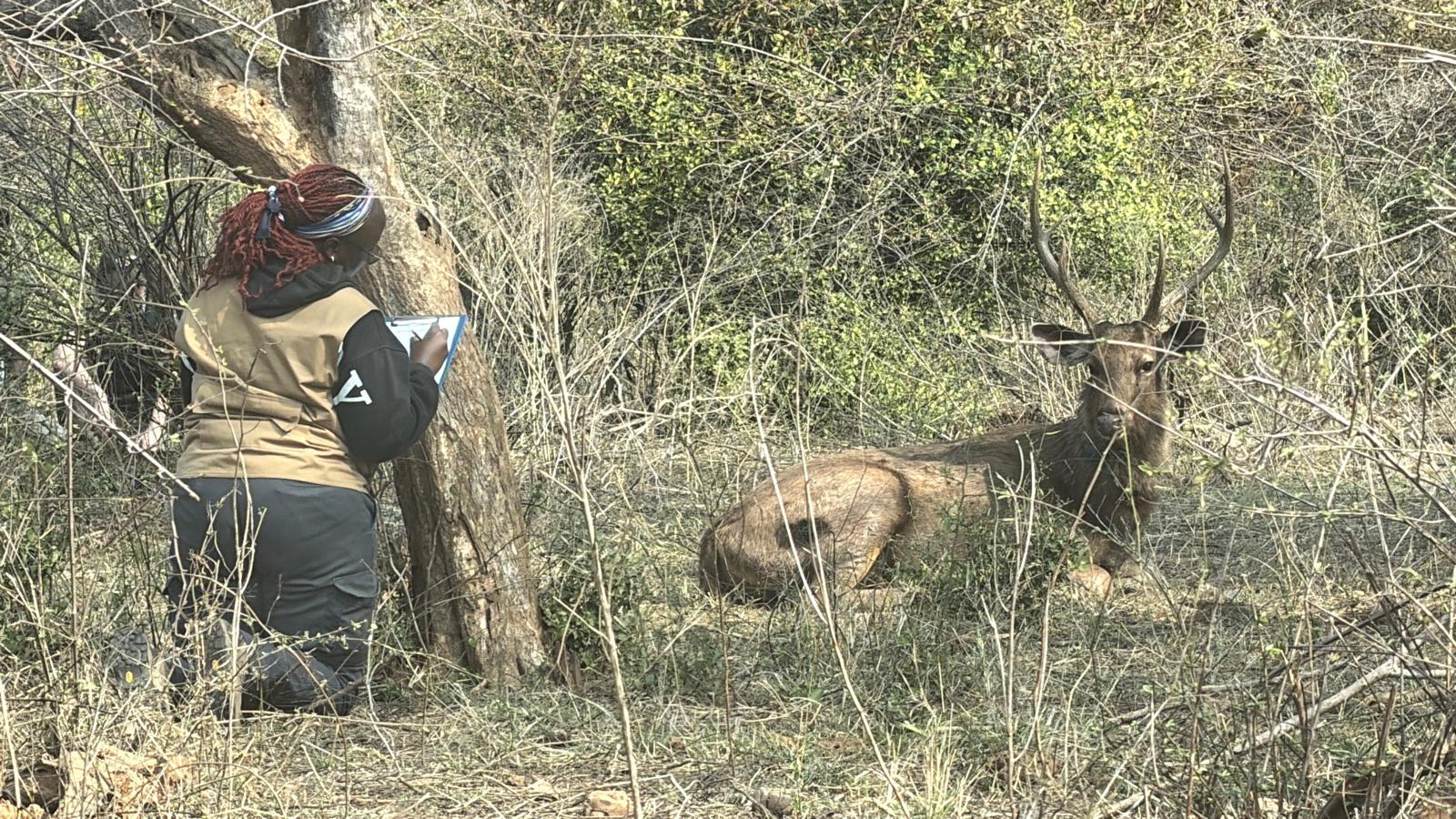
This year we have already supported the travel of two talented vets, Dr Jessica Kamatenesi from Rwanda, and Dr Edel Odhiambo from Kenya, to attend the IWAH course in India. Both found the course very powerful in terms of teaching them the importance of considering wider ecosystem health and disease ecology, broadening their focus from that of ‘just’ animal health.
Alongside helping veterinary professionals and other key frontline conservationists access reputable training courses, we also deliver content to courses set up by partner organisations. What began over a decade ago as hands-on clinical help for the thousands of birds injured by glass-coated kite string during the annual kite-flying festival in India grew into the Operation Avian conference and practical workshops, which has just run for a fourth year. Next year, our Indian partners, Raksha Jaipur, will run it with minimal input from WVI – a real milestone. We’re currently involved with training rangers through the Corozal Sustainable Futures Initiative in Belize. The ranger teams work on the conservation frontline, being responsible for intervening when big cats come into conflict with humans.
While much of this direct training takes place in country, there are also times when it’s important to bring people out of their everyday environment in order to be able to expose them more fully to different ways of working, and give them space to focus without distraction. In recent years, we’ve hosted IWAH graduate, Dr Amir Sadaula from Nepal, in the UK, to give him experience in gas anaesthesia and other key techniques. We’ve also brought Ghanaian vets responsible for the health of endangered primates to the UK, in order to complement in situ training they have had over several years with vet nurse Matthew Rendle. And plans are now coming together to bring a big cat ranger team over from Belize in the near future.
Of course, no training happens in a vacuum. It’s also always about networking with wildlife health professionals from other places, sharing knowledge and experience and knowing where you can go in future to ask for help and advice. And beyond the purely professional, it’s about providing a source of emotional support and friendship between colleagues who share many of the same passions, frustrations, challenges and triumphs – people who understand you and your priorities.
As we advocate for mainstreaming wildlife health, and a more systematic approach to implementing a holistic One Health agenda - that gives parity to animal, human and ecosystem health – providing and supporting training opportunities for those on the conservation frontline is truly fundamental.
You may also like:
EarthRaise 2026: Empowering Frontline Conservationists https://bit.ly/3QlnF0M
Doyou know what we (actually) do? https://bit.ly/4tDVA33
OneHealth: What does that really mean for wildlife? https://bit.ly/4bSrEsC
[1] https://www.thelancet.com/journals/lanplh/article/PIIS2542-5196(25)00281-5/fulltext
