.png)
.png)

.png)
.png)


.png)


.png)
.png)


.png)

2025 WVI Wildlife Health Bursaries
23/12/2025
.jpg)
2025 WVI Bursary winners
This is the second year we have had bursaries to offer vets in areas where there is little or no specialist training or conferences available to help them where they can learn the specialist skills they need.
It is an initiative that was set up by Barbara and Sharon Miller; wife and daughter of long term supporter, Brian Miller, following his untimely death in 2024. Brian, a wildlife lover himself, was immensely proud of his daughter setting up both Wildlife Vets International and, prior to that, AMUR, a charity which supported the conservation of Amur leopards and tigers. The Miller family have supported both charities over many years and we are incredibly grateful to them for this wonderful gesture in Brian’s name.
Since the instigation of the Brian Miller Memorial Bursary in July 2024 and the wonderful vets who took the time to apply, we had too many excellent applicants. We therefore looked to grow the number of bursaries that we offer.
We would like to thank Metamorphosis Foundation and other private donors for sponsoring other bursaries alongside Brian Miller’s family.
We had 27 entries from vets all over the world, doing a huge variety of jobs and applying to attend specialist training on courses such as IWAH, Centre of Field Studies, internships at WildScapes and conferences such as SCoPE, EAZWV, iCARE, and the International Elephant Conservation and Research Symposium. Applications highlighted how few opportunities there in general, but particularly for vets in high biodiverse, low income countries to gain knowledge and experience in wildlife health. It was hard to choose three winners and were we have been able to help others with introductions or further information, we have. We had particularly strong applicants from Latin America this year, which is why the winners happen to all be from the same part of the world.
The 2025 Bursary winners are:
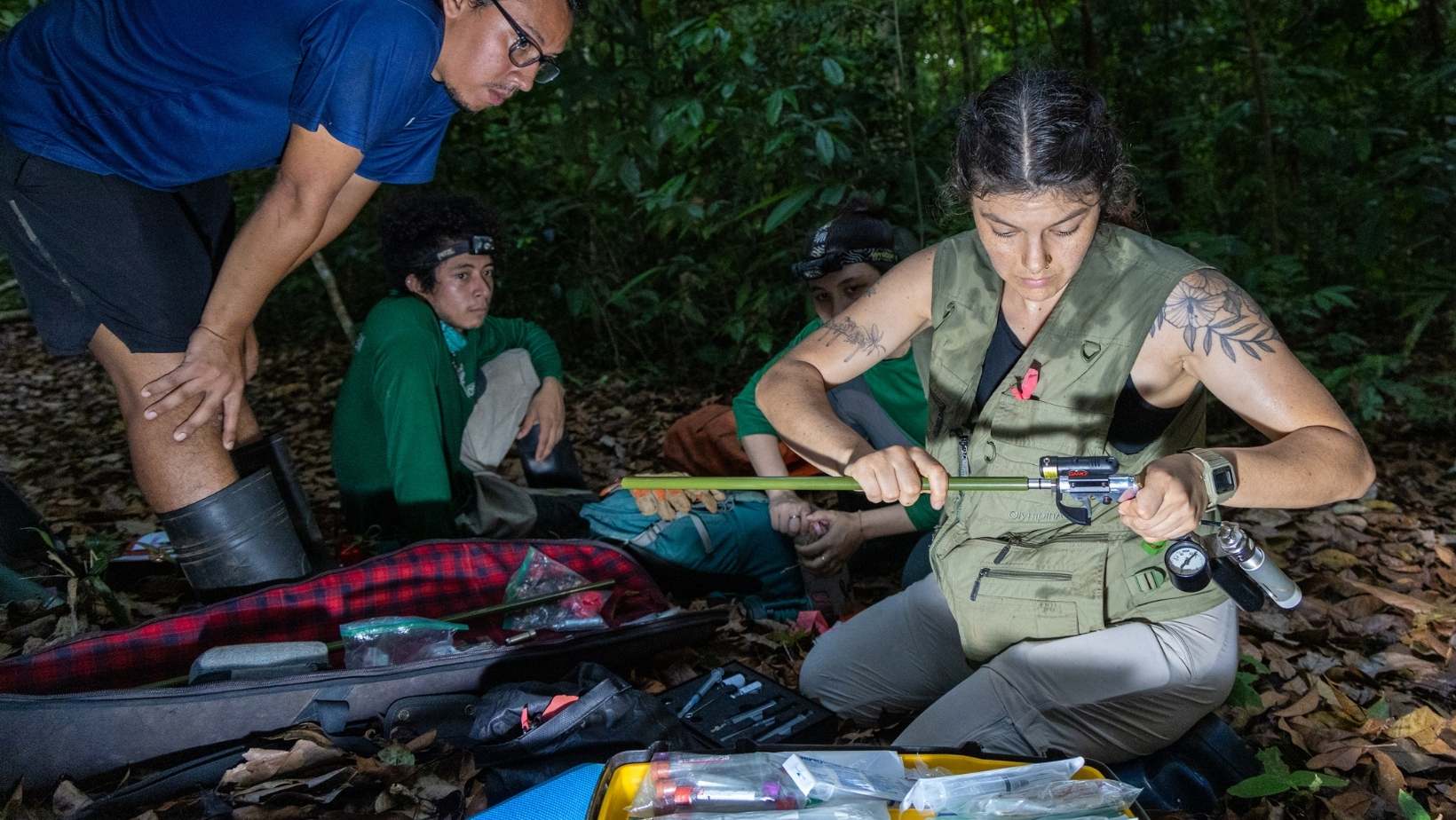
Dennise Ortiz Angulo, Costa Rica
Dennise has won the Brian Miller Memorial Bursary. It is thanks to Brian Miller’s family that WVI started awarding bursaries. Sharon Miller, Brian’s daughter and founder Trustee and Chair of WVI, was one of the judges and commented:
“We awarded Dennise the BMMB because of her passion to integrate veterinary medicine into broader ecosystem health initiatives and work with a wide network of professionals to achieve conservation goals. We ask applicants to inspire us with their story and Dennise certainly did that. Speaking on behalf of our family, we are delighted to support WVI like this and particularly to support Dennise this year as my father visited Costa Rica, particularly to hear the howler monkeys ‘howl’!”
Dennise has used her strong foundation in domestic animal medicine to underpin her experiences and search for knowledge in wildlife medicine in the five years since she graduated. Dennise currently works for Osa Conservation in Costa Rica, spending two years as a vet for their Movement Ecology Project. Her role was to lead teams capturing ocelots, puma, vultures and tapirs, carrying out health assessments, preventative medicine and providing medical and surgical treatment where needed. Dennise also helped monitoring these animals using several techniques including camera traps and GPS collaring, giving her a broad overview of the project.
Currently, Dennise joins a multidisciplinary team as the wildlife vet for Osa Conservation’s rewilding programme, the first of its kind in Costa Rica and looks forward to bringing veterinary medicine into this broader ecosystem health initiative.
Dennise will spend her bursary getting to the Center of Wildlife Studies’ Wildlife Capture and Immobilisation field course. Whilst already implementing some of what she is learning in the online course, the field course will further embed what she is learning through the online course and enable her to learn further from the course tutors and other participants.
Collaboration and the transfer of wildlife health knowledge to the places it is needed most is at the core of WVI. Therefore, we were particularly pleased to see that Dennise feels strongly it is important to work in multidisciplinary teams and to incorporate wildlife health into broader ecosystem initiatives. And that she contributes to outreach programmes focused on mitigating human-wildlife conflict and promoting biodiversity conservation.
We look forward to hearing how Dennise’s skills and knowledge will enhance free ranging wild animal welfare and support the long-term success of the conservation efforts in the Osa Peninsula, Costa Rica.
Valentina Ellis, Argentina
We would like to thank the Metamorphosis Foundation for awarding Valentina this bursary. The judges commented:
“Valentina’s passion to develop her own skills and demonstration of the huge benefit that having a vet on the team brings (beyond anaesthesia and health surveillance) won her this bursary. We appreciated her ambition to set up a wildlife veterinary service in Latin America to offer specialist support to conservation projects whilst also creating training opportunities for other veterinarians brought her completely into line with WVI’s values. We look forward to supporting Valentina.”
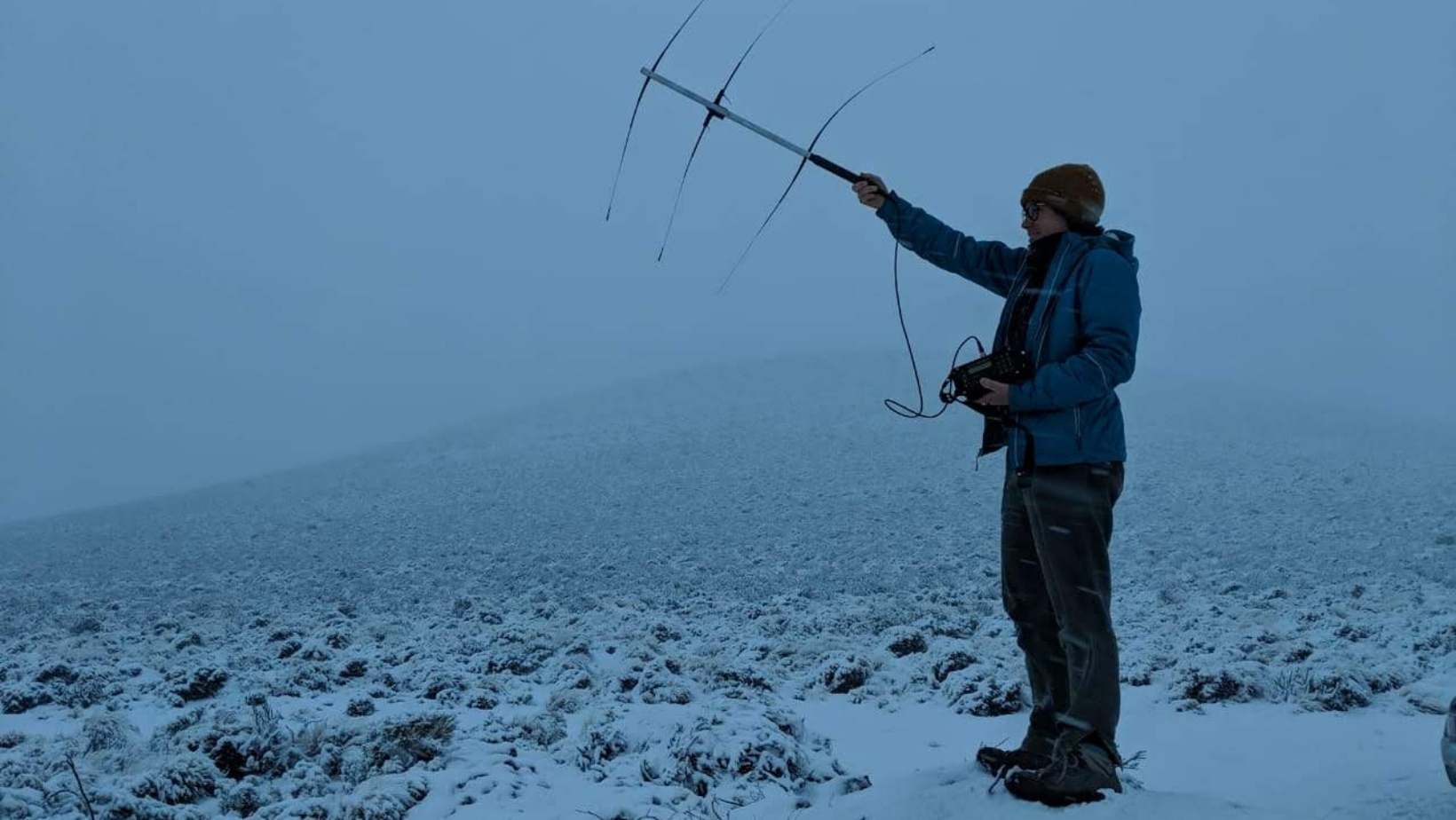
Valentina has spent five years since graduation working with Fundación Rewilding Argentina, rescuing, treating and reintroducing a number of threatened species, including jaguar, in the Iberá Wetlands. In addition, Valentinna has volunteered on raptor rehabilitation in Spain and jaguar projects in Panama and Brazil.
Working in multidisciplinary collaborations with both fieldwork and veterinary skills, in addition to a willingness to pass on her knowledge and her thirst for learning, makes Valentina a perfect fit for WVI. With the bursary.
Valentina would like to join a Wildscapes internship in South Africa. She will gain knowledge in other ecological systems, under the supervision of some of the top wildlife vets in the world. Valentina will also learn about the Wildscapes business model, as she too would like, one day, to set up a wildlife veterinary service in Latin America, providing specialist support to conservation projects and creating learning opportunities for veterinarians.
“By supporting me, WVI would be investing in a committed and hardworking professional dedicated to applying these new skills in Latin America, where wildlife faces increasing threats and there is an urgent need for better trained specialists.” Valentina Ellis.
Alejandro Pereda Sanchez, Peru
We would like to thank the generous private donor who has sponsored the bursary awarded to Alejandro.
The judges commented:
“Because of WVI’s long association with carnivore conservation in Asia and to a lesser extent in Africa, we appreciated Alejandro’s investigation into the transfer of pathogens between native carnivores and free-roaming dogs and cats in the Tumbasian dry forest of La Libertad. His motivation and eagerness to learn came across in his application, together with the frustration that there are limited opportunities for specialist training in Peru, and northern Peru in particular. We look forward to hearing about the changes in his work as a result of an increase in competence and knowledge of wildlife health in the wider ecosystem following his course at the Tamandua Institute.”
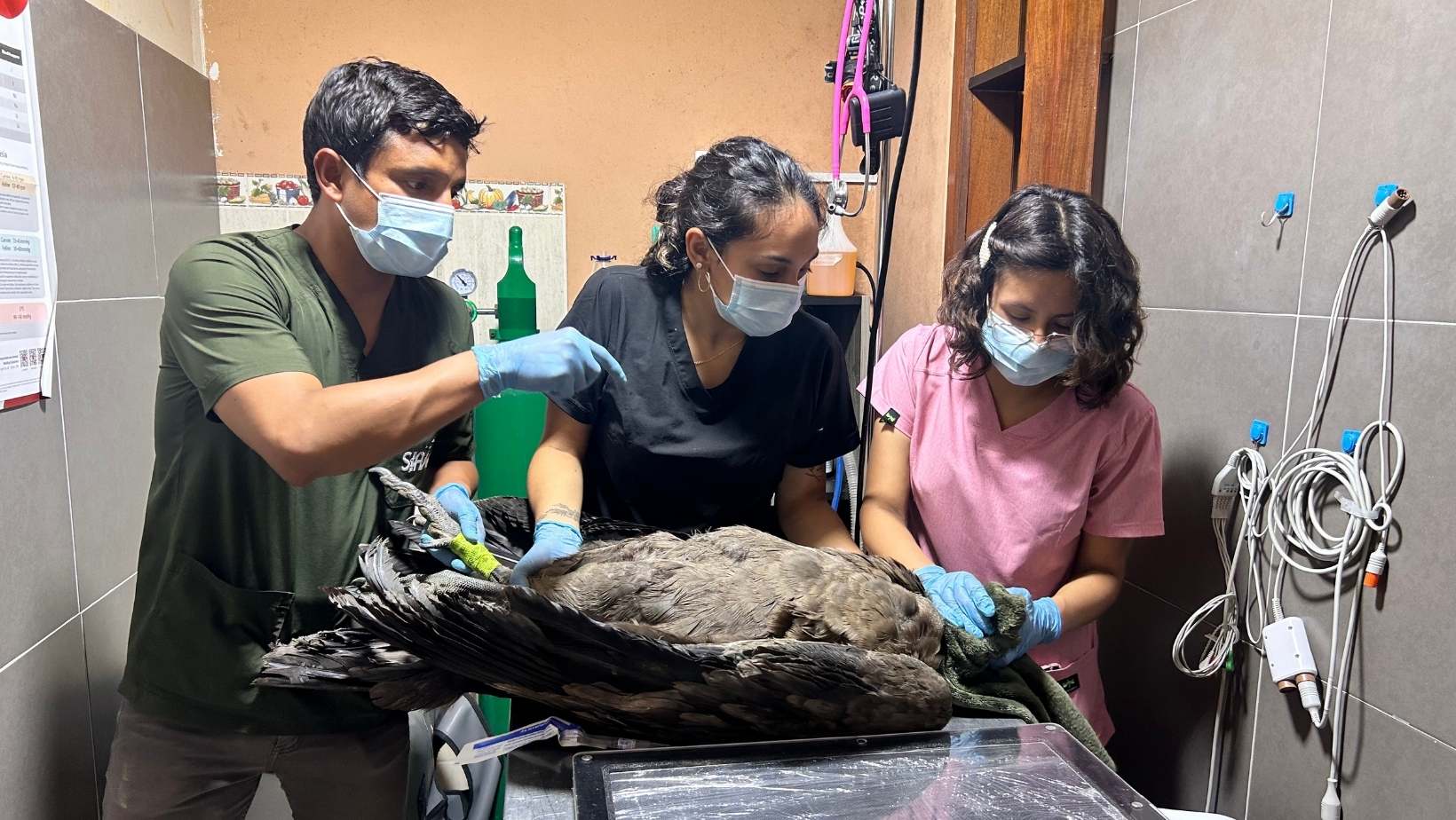
Alejandro has held various academic, government and research roles and has extensive experience in wildlife and exotic animal care and rehabilitation. Working in a zoo, an exotic animal clinic in northern Peru, supporting local marine mammal rescue and on carnivore conservation projects in the Tumbesian dry forest of La Libertad, Peru.
Alejandro has been the principal coordinator of this project looking at the disease transmission at the human- domestic animal – wild carnivore interface and has such been awarded two Rufford Small Grants.
In addition, Alejandro has been the project veterinarian on ecology projects aimed at conserving pampas cats (Leopardus colocolo) and the Andean bear (Tremarctos ornatus).
With his WVI Wildlife Health Bursary, Alejandro will attend the International Training Course on Working With Wildlife at the Tamandua Institute, Brazil. This course is open to veterinary professional, biologists, ecologists and conservationists. It gives delegates experience in practical skills in wildlife rescues, handling complex species, rehabilitation in the context of a conservation project in a mixed-use landscape.
As an organisation that specialises in handing on the knowledge, we were particularly delighted to hear the following in Alejandro’s application:
“I believe it is highly relevant to train more professionals in the field of wildlife conservation in northern Peru, a region that is largely underserved compared to other areas of the country where more conservation projects are concentrated in tropical forests.
Furthermore, attending this event would be highly beneficial for expanding my professional network with experts in the field, fostering collaborations that could strengthen conservation and health initiatives in Peru.”
We look forward to finding out how it goes!
